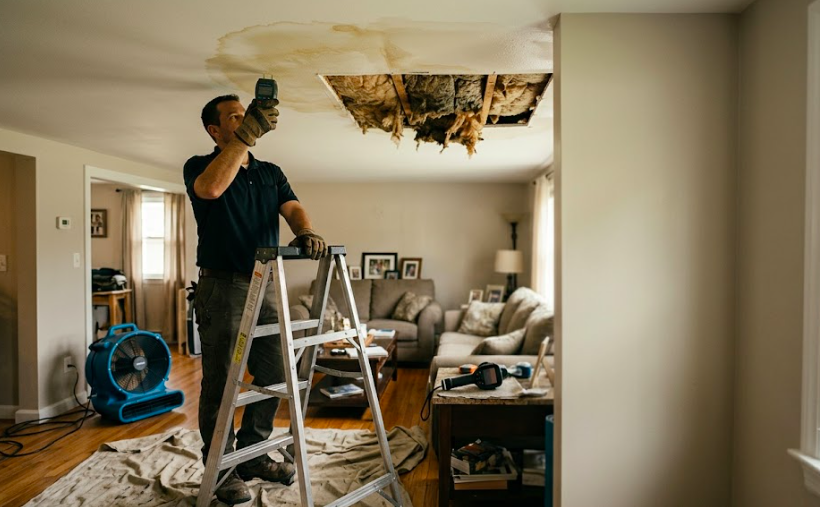
You’ve found a brown stain spreading across the ceiling, or worse, a section that sags and drips. The first question most homeowners ask is whether the ceiling can be saved or has to come down.
The answer depends on how long the material has been wet, how much water got in, and what kind of water it was. This guide explains how to judge each factor and when repair makes sense.
First, Make It Safe
Before you assess anything, deal with the safety risks.
- Sagging or bulging ceiling: Wet drywall is heavy and can collapse without warning. Keep people and pets out of the room. If a section is bulging with trapped water, a professional can safely puncture it to release the water in a controlled way.
- Electrical hazards: Water near light fixtures, ceiling fans, or outlets is a shock risk. Turn off power to the affected area at the breaker before going near it.
- Stop the source: If the water came from a roof leak, a temporary tarp can limit further damage until the roof is properly repaired.
Can Wet Drywall Be Saved?
Drywall is made of gypsum between paper facings. It absorbs water easily and loses strength quickly, but it isn’t always a total loss.
Drywall can often be dried and repaired when:
- The leak was small, and the material was wet for less than 24 to 48 hours
- The water was clean, such as fresh rainwater or a supply line leak
- The surface is stained but still firm, flat, and intact
- Moisture readings show the material can reach normal dryness
Drywall should usually be replaced when:
- It is sagging, bulging, crumbling, or soft to the touch
- The paper facing is peeling or separating
- It has stayed wet for more than two days
- There is visible mold or a persistent musty smell
- The water was contaminated, such as sewage or floodwater
A key point: a stain is not the same as damage. Stains can be sealed and painted once the material is truly dry, but painting over a damp ceiling traps moisture and invites mold.
What About Wet Insulation?
Insulation hides above the ceiling, so it is often wetter than the drywall below it.
- Fiberglass batts: If the water was clean and the insulation is dried quickly, it can sometimes be saved. If it stays compressed, stained, or damp, replace it, because wet insulation loses its R-value and holds moisture against the framing.
- Cellulose and blown-in insulation: These absorb water and clump, and they are very slow to dry. They are usually removed and replaced.
- Spray foam: Closed-cell foam resists water and can often stay in place once the surface dries. Open-cell foam absorbs more water and may need removal.
Insulation that has been wet for several days, or that has been exposed to contaminated water, should generally be treated as a replacement.
How Professionals Decide: Repair or Replace
Guessing by eye is risky because damage often hides above and behind the visible stain. Restoration professionals typically use:
- Moisture meters to measure moisture inside drywall, framing, and insulation, not just on the surface
- Thermal imaging to find wet areas that aren’t visible
- Water source and category assessment. Clean water is far more salvageable than contaminated water
- Timeline review. The longer materials stay wet, the lower the odds of saving them
If the readings show materials can be dried to normal levels, they may be dried in place with fans and dehumidifiers. If not, the affected sections are cut out and replaced. A professional water damage restoration company in Lake Charles can run these tests, dry the structure, and document the results, which also helps if you file an insurance claim.
The Mold Clock
Mold can begin to grow within 24 to 48 hours on damp materials, especially in warm, humid climates like the Gulf Coast. That’s why speed matters more than almost anything else. The U.S. Environmental Protection Agency advises that the key to controlling mold is controlling moisture, and that wet materials should be dried within a day or two. Its mold and moisture guidance is a helpful reference if you suspect growth in your home.
Warning signs that mold may already be present:
- A musty or earthy odor, even after the stain looks dry
- Dark spots or fuzzy patches on the ceiling or around vents
- Paint that bubbles, peels, or discolors again after being repaired
- New allergy-like symptoms indoors, such as sneezing or irritated eyes
If you see widespread mold, don’t just wipe it away. Larger areas call for professional containment and removal so spores aren’t spread through the house.
Repair Costs vs. Replacement Costs
Quick action is the cheapest option.
- Catching it early: Drying and spot repair can cost far less than rebuilding a ceiling.
- Waiting: Delay can turn a small patch into a full ceiling replacement, plus insulation, mold remediation, and repainting.
Because costs vary widely by home and damage level, get a written estimate and ask what is included, such as drying, demolition, replacement, and finishing.
Don’t Skip the Roof Repair
Fixing the ceiling without fixing the leak is wasted money. Water that came through once will come through again, and every new soaking makes repair less likely to succeed. Always have the roof inspected and repaired first, or alongside the interior work.
A Simple Decision Checklist
Likely repairable:
- Small, recent leak with clean water
- Firm drywall with only light staining
- Insulation that is dry or dries fast
- No odor or visible mold
Likely needs replacement:
- Sagging, soft, or crumbling drywall
- Wet for 48+ hours
- Saturated or compressed insulation
- Visible mold or musty smell
- Contaminated water
When in doubt, have the area tested. Hidden moisture is the most common reason a “fixed” ceiling stains again months later.
When to Call a Roofer
A wet ceiling is a symptom, and the roof is often the cause. If you see stains after a storm, missing shingles, daylight in the attic, or damp insulation, schedule an inspection before the next rain.
At Al Schmidt Roofing, we find the source of the leak and repair it properly so your ceiling repair lasts. Visit our home page to learn about our services and request an inspection.
This article is general information. Conditions vary, so have a qualified professional assess your home.
Leave a Reply