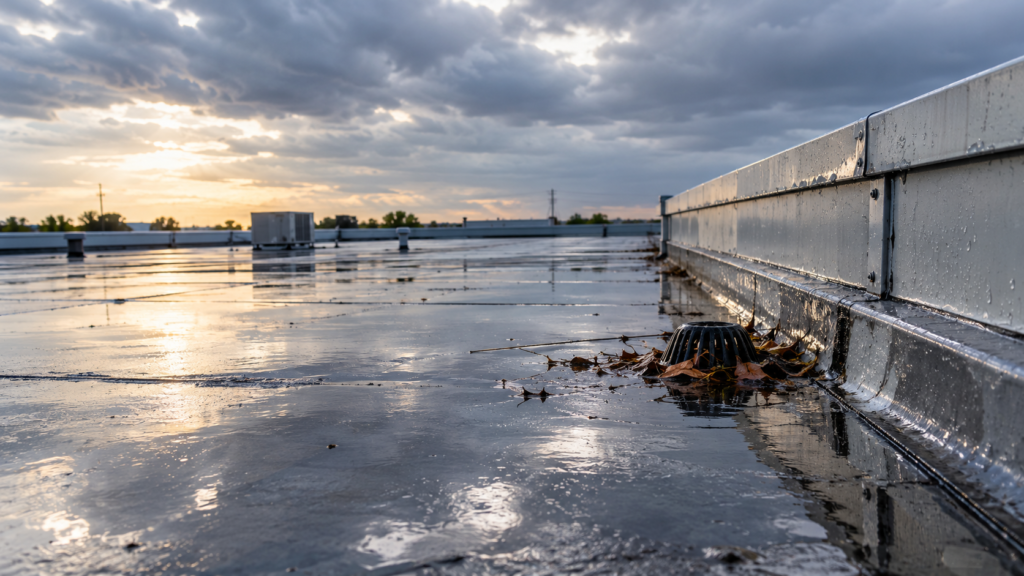
Most roof leaks don’t start in the middle of a roof. They start at the places where one surface meets another: a valley, a wall, a vent, a chimney, a drain. On flat and low-slope roofs, these transition points do the hardest work, and in Southwest Louisiana, with heavy rain, high humidity, intense sun, and hurricane-season winds, they fail first.
At Al Schmidt Roofing, we see the same pattern again and again: a small flashing or seam problem goes unnoticed for months, and by the time a stain shows up on the ceiling, the damage inside is already well underway. This guide explains where water gets in, what it ruins once it does, and what you can do about it.
Why Flat and Low-Slope Roofs Leak Differently
A steep roof sheds water fast. A flat roof doesn’t. Because water moves slowly (or not at all), any weakness gets tested for longer. Common trouble spots include:
- Ponding water – Standing water that remains for more than 48 hours after rain adds weight, speeds up membrane wear, and finds every tiny gap.
- Seams and laps – Heat, UV exposure, and movement can open seams in modified bitumen, TPO, EPDM, and built-up roofing.
- Clogged drains and scuppers – When water can’t leave, it backs up against walls and penetrations.
- Membrane blisters and cracks – Trapped moisture and constant expansion and contraction weaken the surface over time.
Roof Valleys: The Highway for Water
A valley is where two roof planes meet at an inward angle. All the water from both sides funnels into that narrow channel, so valleys carry far more water than any other part of the roof.
What goes wrong in valleys:
- Debris such as leaves, granules, and branches blocks the flow and forces water sideways under roofing material.
- Valley lining or underlayment wears out or was installed poorly.
- Nails or fasteners placed too close to the center line create entry points.
- Sealant dries out, cracks, and pulls away.
A valley leak is often sneaky. Water can travel along the decking or a rafter before dripping, so the stain on your ceiling may be several feet from the actual opening.
Flashing: Small Metal, Big Responsibility
Flashing is the thin metal or membrane material that seals the joints and edges of a roof. It protects the areas where the roof meets something else:
- Walls and parapets
- Chimneys
- Skylights
- Vent pipes and HVAC curbs
- Roof edges and drains
Why flashing fails:
- Corrosion and age: Metal rusts, and sealants and caulk harden and crack.
- Thermal movement: Daily heating and cooling slowly pulls flashing away from the surface.
- Storm damage: High winds can lift or bend flashing, creating gaps.
- Poor installation: Flashing that’s too short, improperly lapped, or relying only on caulk won’t last.
Caulk is not a permanent fix. If a roofer’s only solution is a bead of sealant over failing flashing, the leak will usually come back.
What Water Ruins Inside Your Building
Once water gets past the roof, it follows gravity and the path of least resistance. By the time you see a ceiling stain, here is what may already be affected:
- Insulation – Wet insulation loses its R-value and stays damp, which raises energy bills and feeds mold.
- Roof decking and framing – Constant moisture leads to rot, weakening the structure.
- Drywall and ceilings – Sagging, bubbling paint, stains, and eventual collapse.
- Mold and mildew – In Louisiana’s humidity, mold can begin growing within 24 to 48 hours of a persistent leak.
- Electrical systems – Water in light fixtures, outlets, or wiring is a safety and fire risk.
- Flooring, furniture, and belongings – Water that runs down walls can reach floors and finishes far from the leak.
- Air quality and health – Mold spores and damp materials can aggravate allergies and respiratory problems.
Warning Signs Worth Checking Today
You don’t have to climb onto the roof to spot early trouble. Look for:
- Brown or yellow ceiling stains, especially after rain
- Peeling paint or bubbling drywall near exterior walls
- A musty smell in a room or attic
- Visible daylight or damp spots in the attic
- Pooling water on a flat roof that lingers after storms
- Gutters, drains, or scuppers packed with debris
- Cracked, lifted, or rusted flashing visible from the ground
If you notice any of these, schedule an inspection rather than waiting for the next storm to make it worse.
How Roofers Fix Valleys and Flashing Problems
The right repair depends on what an inspection finds, but typical solutions include:
- Cleaning and clearing valleys and drains
- Replacing worn valley lining or underlayment
- Removing failed flashing and installing new, properly lapped flashing
- Re-sealing and reinforcing membrane seams
- Correcting drainage issues that cause ponding
- Repairing or replacing the section of roof that has reached the end of its life
Catching these problems early is almost always cheaper than replacing wet decking, insulation, and interior finishes later.
If Water Has Already Gotten In
Fixing the roof stops new water from entering, but it doesn’t dry out what’s already wet. If your home or building has soaked insulation, damp drywall, or signs of mold, it’s important to get the structure properly dried and restored before the damage spreads.
For homes and businesses in the area, a local water damage restoration company in Lake Charles can handle extraction, drying, and cleanup after a roof leak, so the problem is fixed from the roof down to the floor. Pairing prompt roof repair with professional restoration is the best way to protect your property and your health.
Protect Your Roof Before the Next Storm
Valleys, flashing, and flat roof seams don’t fail overnight, and they rarely announce themselves until water is already inside. A routine inspection, especially before and after hurricane season, can catch small defects while they’re still inexpensive to fix.
Ready to have your roof checked? Contact the team at Al Schmidt Roofing to schedule an inspection and get a clear, honest assessment of your valleys, flashing, and flat roof system.
Leave a Reply