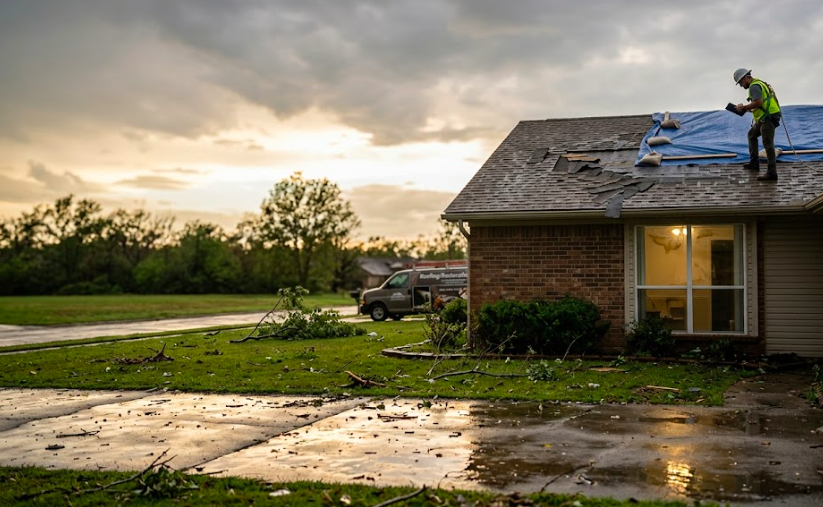
When a storm tears shingles off your roof and rain soaks your ceiling, you face two problems at once: a damaged roof and a water-damaged home. Many homeowners assume insurance treats them as one claim. It doesn’t. How your policy responds depends on what caused the damage, how fast you act, and how well you document it.
This guide explains where roof damage ends, where water damage begins, and what to do so your claim isn’t denied.
Roof Damage vs. Water Damage: What’s the Difference?
Roof damage is physical harm to the roofing system itself: missing or cracked shingles, torn flashing, punctured decking, or damaged vents and chimneys.
Water damage is what happens inside the home when water gets through: stained ceilings, wet insulation, warped flooring, swollen drywall, and mold.
Insurers look at these separately, and the cause of the roof damage often decides whether the interior damage is covered at all.
What Homeowners Insurance Typically Covers
Most standard homeowners policies cover damage that is sudden and accidental. For roofs, that usually means:
- Wind damage, including shingles torn off in a hurricane or tropical storm
- Hail damage
- Falling objects, such as a tree limb crashing through the roof
- Fire and lightning
If one of these events opens a hole in your roof and rain gets in, the resulting interior water damage is generally covered too. That includes repairs to ceilings, insulation, walls, and flooring, and often the cost of drying the home out.
What Insurance Commonly Does Not Cover
Claims are most often denied for these reasons:
- Wear and tear: A roof that has simply aged out is considered a maintenance issue, not an insured event.
- Neglect: If a small leak went unrepaired for months and caused rot or mold, the insurer may argue you should have fixed it sooner.
- Poor installation or old repairs: Faulty workmanship is usually excluded.
- Flooding: Rising water from storm surge, overflowing rivers, or heavy runoff is excluded from standard policies. It requires separate flood insurance, such as a National Flood Insurance Program policy or a private flood policy.
- Gradual leaks: Slow, ongoing seepage is treated differently from a sudden burst or storm opening.
In Gulf Coast states, also check your wind and hurricane deductible. Many policies use a percentage of your home’s insured value rather than a flat dollar amount, which can be much higher than your standard deductible.
The Key Question: Was the Roof Opened First?
This is where many claims are won or lost. With wind-driven rain, insurers often ask whether a covered event, like wind or hail, first created an opening in the roof. If it did, the rain damage inside is more likely to be covered. If water entered through an already-worn or unsealed roof, the claim may be denied.
That’s why a professional roof inspection matters. A roofer can identify the point of entry and document whether the damage came from a storm or from age and wear, which is exactly the evidence an adjuster looks for.
Step-by-Step: Protecting Your Claim After a Roof Leak
1. Make the home safe. Stay away from sagging ceilings, standing water near outlets, and any area with electrical risk.
2. Stop further damage. Insurers expect you to take reasonable steps to prevent additional loss. Place tarps over the damaged roof area, move belongings, and keep receipts for any emergency materials.
3. Document everything. Take dated photos and video of the roof damage, the interior damage, and affected belongings before cleanup. Note the date and time of the storm.
4. Call your insurance company promptly. Most policies require timely notice. Ask about your deductible and the claim process, and keep a record of every conversation.
5. Get a professional roof inspection. A written report from a licensed roofer supports your claim and gives you a clear repair estimate.
6. Start drying out the structure quickly. Wet drywall and insulation can begin growing mold within 24 to 48 hours. A professional water damage restoration company in Lake Charles can extract standing water, dry the structure, and document moisture levels, which also strengthens your insurance file. Fixing the roof alone won’t dry the walls and ceiling behind it.
7. Keep damaged materials until the adjuster visits when it’s safe to do so, and get repair estimates in writing.
Why Fixing the Roof Isn’t Enough
A repaired roof stops new water from coming in, but it does nothing for the moisture already trapped in insulation, framing, and drywall. Left alone, that moisture leads to mold, odors, and structural weakening that can show up weeks later. Insurers may also push back on later-discovered damage if it wasn’t addressed promptly.
The best approach is a two-part response: a roofer to repair the cause, and a restoration team to dry and repair the effects.
Tips for a Smoother Insurance Claim
- Review your policy before storm season, especially your deductibles and exclusions.
- Ask your agent whether you have flood coverage, since standard policies don’t.
- Schedule regular roof inspections and keep the reports. They show your roof was maintained.
- Don’t sign contracts or accept a final settlement before you understand the full scope of the damage.
- Know your rights. The Louisiana Department of Insurance offers consumer guidance and complaint resources if you believe a claim was handled unfairly. For plain-language explanations of coverage types, the Insurance Information Institute is also a reliable resource.
Policies vary by insurer and state. This article is general information, not legal or insurance advice. Review your own policy or speak with your agent for specifics.
When to Call a Roofer
If you notice missing shingles, ceiling stains, daylight in the attic, or granules clogging your gutters, don’t wait for the next storm to find out how bad it is. A prompt inspection protects your home and your insurance claim.
At Al Schmidt Roofing, we inspect, document, and repair storm-damaged roofs. Visit our home page to learn about our services and request an inspection.
Leave a Reply