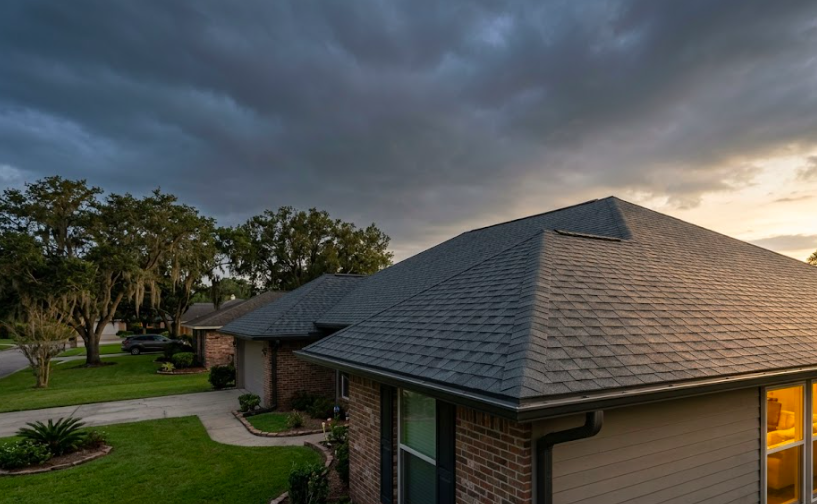
When a major storm rolls in, most homeowners think about the roof first. That makes sense, since it’s your home’s first line of defense. But a roof is only half the story. Wind-driven rain, fallen limbs, and flooding can do serious damage to your ceilings, walls, insulation, and floors, often before you even notice a problem.
With hurricane season on the Gulf Coast running through the end of November, now is the time to prepare. This guide walks you through protecting your roof and the interior of your home so a storm doesn’t turn into a costly repair project.
Why Roof and Interior Protection Go Together
Your roof and your interior are one connected system. A single lifted shingle or cracked flashing can let water into the attic. From there it soaks insulation, stains ceilings, and weakens drywall. Left alone, trapped moisture invites mold, which can begin growing within 24 to 48 hours.
Preparing for a storm means stopping water at the roof and being ready to act if it gets inside anyway.
Part 1: Prepare Your Roof Before the Storm
1. Schedule a professional roof inspection
A trained eye catches what you can’t see from the ground. A roofer can spot:
- Loose, curling, cracked, or missing shingles
- Damaged or lifted flashing around chimneys, vents, and skylights
- Worn sealant around roof penetrations
- Soft spots or sagging that signal deeper structural problems
Fixing small issues now is far cheaper than repairing storm damage later.
2. Clean your gutters and downspouts
Clogged gutters cause water to back up under shingles and overflow along the fascia. Clear out leaves and debris, and make sure downspouts direct water at least a few feet away from your foundation.
3. Trim overhanging trees
Branches that hang over your roof can snap in high winds and puncture shingles or decking. Have a professional trim limbs back before storm season peaks. Remove any dead or weak trees close to your home.
4. Check roof age and condition
Most asphalt shingle roofs wear out after 20 to 25 years, and sooner under harsh sun and humidity. If your roof is aging, a repair or replacement before storm season is often the smarter investment. Ask your contractor about wind-rated shingles and reinforced underlayment for added protection.
5. Secure loose items outside
Patio furniture, grills, and yard décor can become projectiles in strong winds. Anchor or store them before a storm arrives.
Part 2: Protect Your Home’s Interior
1. Inspect your attic regularly
Your attic is often where roof leaks show up first. Look for:
- Water stains on rafters or decking
- Damp or compressed insulation
- Musty odors
- Daylight coming through the roof boards
2. Know where your water shutoff is
If a storm causes a burst pipe or major leak, every minute counts. Make sure everyone in the household knows where the main water shutoff valve is and how to use it.
3. Move valuables off the floor
Elevate electronics, documents, and keepsakes, especially in ground-floor rooms and garages. Store important papers in waterproof containers.
4. Document your home with photos and video
Before storm season, record the condition of your roof, ceilings, walls, and belongings. Dated records make insurance claims faster and smoother if damage occurs.
5. Review your insurance coverage
Read your policy closely and confirm what it covers, including wind, water, and flood damage. Standard homeowners policies often exclude flood, so check whether you need separate coverage.
What to Do If Water Gets Inside Anyway
Even a well-maintained home can take on water during a severe storm. If it happens:
- Stay safe first: Avoid standing water and turn off electricity to affected areas if it’s safe to do so.
- Stop the source: Place a tarp over the damaged roof area if you can do so safely, or call a roofer for emergency tarping.
- Document everything: Take photos and video before you move or clean anything.
- Call for professional water removal: Standing water and wet materials need to be dried quickly. Delays lead to mold, warped flooring, and structural damage.
For homeowners in Southwest Louisiana, a local team like water damage restoration Lake Charles can handle water extraction, drying, and mold prevention so your home gets back to normal faster. Quick action after a leak is the most effective way to limit the cost and damage.
Storm Season Prep Checklist
- Schedule a professional roof inspection
- Clean gutters and downspouts
- Trim trees and remove dead limbs
- Repair or replace damaged shingles and flashing
- Inspect your attic for moisture and leaks
- Locate your main water shutoff
- Photograph your home and belongings
- Review your insurance policy
- Save contacts for a roofer and a water damage restoration company
Final Thoughts
Storm season doesn’t have to mean stress. A solid roof, a clear plan, and the right professionals on call protect your home from the top down. Start with a roof check, tackle the small fixes early, and know who to call if water gets in.
Ready to make sure your roof can handle the next storm? Visit Al Schmidt Roofing to schedule an inspection and get your home storm-ready.
Leave a Reply