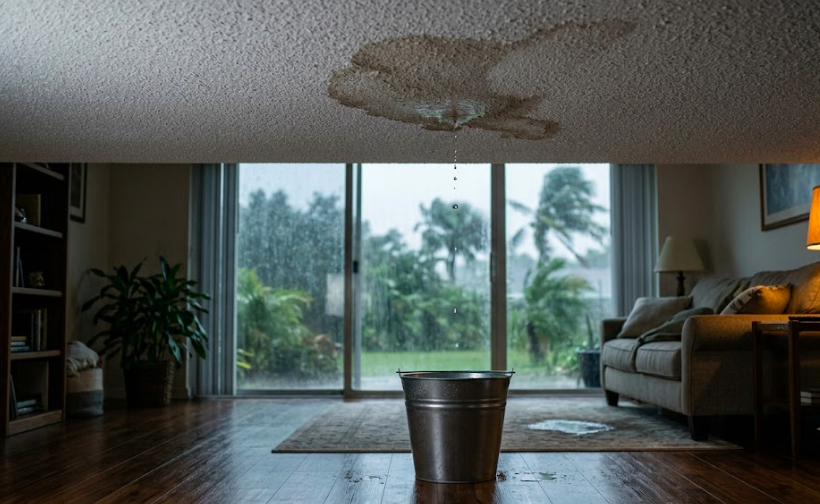
That dark stain spreading across your ceiling isn’t waiting for a convenient time to appear. Roof leaks in Gainesville can develop fast one heavy summer storm or a passing tropical system can turn a small crack into a cascade in under an hour. The damage you end up with depends less on how quickly a roofer can come than on what you do in the hours before they arrive.
This guide covers every step Gainesville, FL homeowners should take the moment they discover a roof leak, from shutting off electrical circuits to starting the insurance documentation trail. Follow these steps and you’ll hand the repair crew a far more manageable problem.
Prioritize Safety First
Before you touch anything or go near the wet area, do a quick safety assessment. Water and electricity are a dangerous combination, and structural damage can make a ceiling collapse without warning.
Turn Off Power to Affected Rooms
If water is dripping near a light fixture, ceiling fan, or outlet, go to your breaker panel and switch off the circuits for the affected areas immediately. Don’t flip them back on until everything is completely dry and inspected by an electrician.
Also look for signs of structural compromise: a ceiling that bulges visibly, walls that have shifted, or floors that feel soft underfoot. If the ceiling is sagging heavily from collected water, puncture it with a screwdriver in a single small spot to let it drain in a controlled stream into a bucket this prevents the whole section from giving way at once. If the sagging is severe, keep people out of that room entirely.
Contain the Active Leak
Your goal is not to fix the leak that’s the roofer’s job. Your goal is to stop water from spreading to new surfaces. Every additional foot of wet drywall, subfloor, or insulation doubles your restoration cost.
- Place buckets, pots, or plastic tubs directly under the drip. Line the container with a plastic bag to slow the water’s force and reduce splash.
- Lay old towels or bath mats around the container perimeter to catch overflow and protect flooring.
- Spread a plastic tarp or painter’s drop cloth over furniture, flooring, and anything else that can’t be moved quickly.
- If rain is still falling and you can safely access the roof flat roofs, gently pitched sections drape a heavy-duty tarp over the damaged area and secure it with sandbags or weighted boards. Never attempt this in lightning, high wind, or on a steeply pitched wet roof. Call your roofer for emergency roof tarping if the roof isn’t safe to access.
Protect Your Belongings
Water wicks laterally through carpet and underlayment much farther than the visible wet spot suggests. Act as if the damage radius is twice what you can see.
- Move electronics, appliances, artwork, and furniture at least six feet from the leak area.
- Take important documents insurance papers, birth certificates, financial records out of the room entirely.
- Pull back area rugs and place them in a dry room. Rugs that stay wet for more than 24 hours typically need professional cleaning or replacement.
- Lift upholstered furniture onto plastic tub covers or aluminum foil squares if you can’t move it; direct contact with wet carpet causes rapid mold growth in the upholstery legs and fabric base.
Document Everything for Insurance
Your insurance claim lives or dies by the quality of your documentation. Start recording the moment you discover the leak, before you clean up a single drop.
What to Capture
- Wide-angle video of the room showing all affected areas, then close-ups of the ceiling stain, drip point, and any visible structural damage.
- Time-stamped photos from multiple angles. Your phone automatically embeds the timestamp in the file metadata, so don’t edit the images before submitting them.
- Any damaged personal property furniture, electronics, clothing, rugs photographed in place before you move it.
- The outside of the roof from ground level, if you can safely reach the exterior. Capture any visible missing shingles, displaced flashing, or debris impact points.
Call Your Insurance Agent Now
Most homeowner policies require you to report a claim promptly. A same-day call begins the clock on your claim and establishes your documentation timeline. Your insurer may also authorize emergency mitigation services before the adjuster visits.
Locate the Source Safely, From Inside
Water is deceptive. A stain on your dining room ceiling might trace back to a leak that entered 10 feet away and traveled along a rafter before dripping down. Don’t assume the entry point is directly above the wet spot.
From inside, in your attic if you have one, look for:
- Wet insulation or discolored rafters.
- Daylight showing through the decking a sure sign of a significant breach.
- Watermarks or mold streaks along rafters these trace the water’s path and often point back to the actual entry point.
- Wet or displaced insulation around penetrations: vents, chimneys, skylights, and HVAC stack boots are the most common entry points.
Stay Off the Roof During or After Rain
Wet shingles and compromised decking can give way with no warning. Unless the roof is flat and bone-dry, leave the exterior inspection to the licensed roofer. Your documentation from inside and from the ground is enough to start the repair process.
Manage Moisture Before It Molds
Mold can begin colonizing wet building materials within 24 to 48 hours in Gainesville’s humid climate sometimes faster in the summer months when indoor humidity is already elevated. The goal in this phase is aggressive drying.
- Run your HVAC system on a dry or cooling mode to pull humidity from the air. Set it to 68–72°F cold, dry air is your best weapon against mold.
- Set up household fans to maximize air circulation in the affected room, directing airflow across wet surfaces rather than blowing directly onto them.
- Use a wet/dry shop vacuum to extract standing water from carpet or hard floors. Don’t let water sit on hardwood for more than a few hours it will warp and buckle.
- Open windows on dry days when outdoor humidity is below 50%. In Gainesville summers, the outdoor air is often more humid than inside; keep windows closed and run the AC instead.
- Remove soaked ceiling tiles, wet carpet padding, or saturated drywall sections that are clearly beyond saving. Bag them and take them outside immediately.
The 48-Hour Window
Porous materials drywall, insulation, carpet padding, wood that are dried within 48 hours can often be saved. Beyond that window, mold remediation becomes likely regardless of surface appearance. Aggressive early drying is always worth the effort.
Call a Licensed Local Roofer
Once you’ve stabilized the situation, call a licensed roofing contractor who knows Gainesville’s building codes and Florida’s specific requirements for wind-resistant shingle installation. This isn’t the time to delay a temporary patch during a dry window can prevent weeks of cascading interior damage.
When you call, be ready to describe:
- Where the leak is appearing inside and roughly where on the roof you think it originated.
- How long the leak has been active and whether it’s still dripping.
- Any visible exterior damage you noticed from the ground.
- Whether the roof has been tarped, and if so, by whom.
At Al Schmidt Roofing, we offer 24/7 emergency response for Gainesville homeowners across Alachua County. Our team provides same-day roof inspections, emergency tarping, and rapid shingle repair with transparent estimates and no pressure to replace when a repair will do the job.
When the Leak Has Caused Significant Interior Water Damage
A roofer stops new water from entering. But if the leak has been active for hours or if it’s caused soaked drywall, saturated insulation, or standing water on the floor the interior water damage is a separate problem that requires its own professional response.
Water that has saturated framing, subfloor, or wall cavities needs industrial drying equipment that goes far beyond household fans and a shop vac. Professional water mitigation technicians use moisture meters to map hidden saturation, truck-mounted extractors to pull water from deep within materials, and commercial dehumidifiers rated for structural drying not the kind available at a hardware store.
Serious Interior Flooding Needs a Restoration Specialist
If your roof leak has led to standing water, soaked flooring, or extensive ceiling damage, a certified water damage restoration company should be called in alongside or immediately after the roofing repair. For homeowners in the Lake Charles and Gulf Coast region, Lake Charles Water Damage Restoration provides 24/7 emergency water extraction, structural drying, and mold remediation with IICRC-certified technicians available around the clock.View Roof Leak Water Damage Mitigation Services
When choosing a water damage restoration company anywhere in the country, look for IICRC certification, 24/7 availability, direct insurance billing, and a documented structural drying process. For Gulf Coast homeowners where roof leaks from hurricane activity and heavy rainfall are a recurring reality fast response time is non-negotiable. The restoration specialists at Lake Charles Rapid Restore understand the unique demands of storm-season water damage in high-humidity climates and can coordinate the full recovery from water extraction through mold prevention.
What Not to Do After a Roof Leak
As important as the steps above is knowing what to avoid. These are the most common mistakes Gainesville homeowners make that turn a manageable repair into an expensive renovation:
- Don’t ignore a small drip: A single drop every few seconds can add up to gallons overnight, and the water you’re not seeing is soaking into your insulation and framing unseen.
- Don’t apply caulk or roofing cement yourself: DIY patches applied to wet surfaces or the wrong materials almost never hold, and they can make the actual repair harder by hiding the true source of the leak.
- Don’t turn the power back on prematurely: Wet wiring and electrical components need to be inspected by a licensed electrician before circuits serving affected areas are re-energized.
- Don’t clean up before documenting: Insurance adjusters need to see the damage as it happened. Mopping, repainting, or disposing of damaged items before the adjuster visits can reduce your claim payout significantly.
- Don’t hire the first contractor who knocks on your door after a storm: Storm chasers out-of-state contractors who flood into storm-affected areas often deliver poor work and disappear before warranty issues arise. Use a locally licensed roofer with a verifiable Gainesville presence.
- Don’t wait to address wet insulation: Wet insulation in an attic is invisible from below but generates mold at an alarming rate. If you suspect the attic insulation has been wetted, have it inspected and removed if necessary before the roofer closes up the deck.
Quick-Reference: 24-Hour Roof Leak Checklist
Print this out or bookmark it for the next storm season:
- Switch off electrical circuits in the affected zone.
- Check for ceiling sagging drain carefully with a small puncture if needed.
- Place buckets; lay tarps over flooring and furnishings.
- Move electronics, documents, and irreplaceable items out of the room.
- Photograph and video all damage before touching anything.
- Call your insurance agent to open a claim.
- Inspect the attic for wet insulation, daylight, and moisture trails.
- Run AC, fans, and a dehumidifier to begin aggressive drying.
- Call a licensed local roofer for emergency inspection and tarping.
- If significant interior flooding has occurred, call a water damage restoration specialist.
Roof Leak in Gainesville? We’re Available 24/7.
Al Schmidt Roofing has served Gainesville and Alachua County homeowners since 2005. Call now for a free emergency inspection we’ll assess the damage, apply an emergency tarp if needed, and give you a clear repair estimate with no pressure.
Leave a Reply