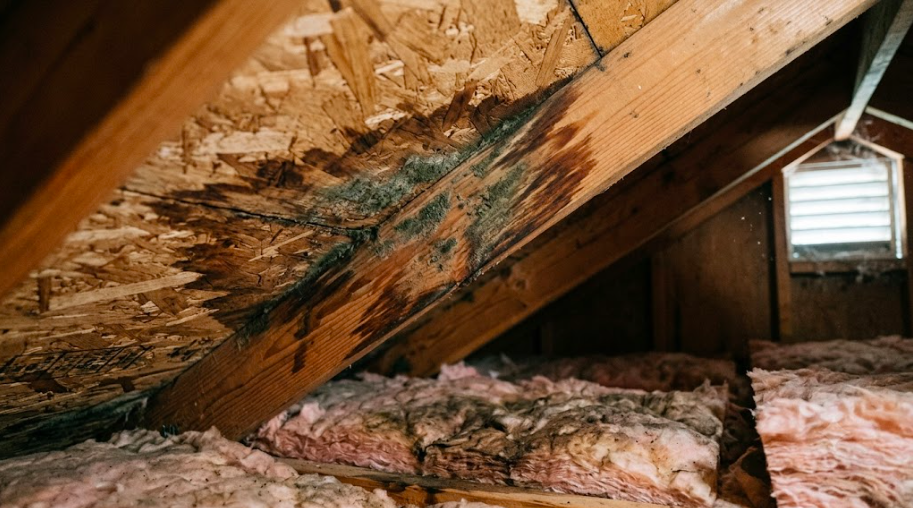
A small roof leak might not seem urgent maybe just a water stain on the ceiling or a drip after a heavy rain. But here’s what most homeowners don’t realize: mold can begin forming in as little as 24 to 48 hours after moisture enters your home.
In Florida’s humid climate, that window is even tighter.
If you’ve noticed a leak or even suspect one understanding the exact mold timeline can be the difference between a minor repair and a full-blown remediation project costing thousands of dollars.
Why Roof Leaks and Mold Are More Connected Than You Think
When water infiltrates your roof, it doesn’t just wet the surface. It seeps into:
- Roof decking and sheathing
- Attic insulation
- Ceiling drywall
- Wall cavities
- Structural wood framing
All of these materials are porous and organic exactly what mold spores need to colonize. And in Gainesville’s subtropical heat, the conditions are practically ideal for rapid mold growth year-round.
The Roof Leak to Mold Timeline: Hour by Hour
0–24 Hours: The Saturation Window
The moment water breaches your roof, the clock starts. During the first 24 hours:
- Water saturates porous building materials (wood, drywall, insulation)
- Humidity levels inside wall and attic cavities spike rapidly
- Mold spores which are always present in the air begin to find moisture and attach to surfaces
- No visible mold yet, but the conditions are set
What to do: If you catch a leak this early, you have a real shot at preventing mold entirely. Get the area dried out within this window using fans, dehumidifiers, and proper ventilation. Call a roofer immediately to stop water entry.
24–48 Hours: Mold Spores Begin to Germinate
This is the critical inflection point. At the 24–48 hour mark:
- Mold spores that have settled on wet surfaces begin to germinate
- Germination is invisible to the naked eye at this stage
- The longer the moisture sits, the faster the colonization process
In Florida’s average summer humidity (75–90%), this timeline can compress even further. The heat accelerates moisture absorption into materials and speeds up the biological process of mold growth.
What to do: If your roof is still leaking or you weren’t able to dry out the area within the first 24 hours, assume mold risk is now active. Professional drying equipment (not just household fans) is required at this stage.
48–72 Hours: Active Mold Colony Formation
By the 48–72 hour mark, mold transitions from germination to active colony formation:
- Small, fuzzy patches may begin appearing on drywall, wood, or insulation
- You may notice a musty or earthy odor often the first sensory warning sign
- Affected materials begin to deteriorate faster
- HVAC systems can pull mold spores into air ducts and spread contamination throughout the home
What to do: At this point, remediation not just drying is likely necessary. Drywall and insulation that have been wet for 48+ hours typically need to be removed and replaced, not just dried in place.
1 Week+: Structural and Health Consequences
A roof leak left unaddressed for a week or more can result in:
- Widespread mold colonization across multiple surfaces and rooms
- Structural wood rot in rafters, trusses, and sheathing
- Black mold (Stachybotrys chartarum) growth, which requires prolonged moisture and is the most difficult to remediate
- Compromised indoor air quality that can trigger respiratory issues, especially in children and the elderly
- Significant structural repair costs on top of mold remediation
At this stage, the scope of damage extends well beyond the roof itself. You’re now looking at a multi-trade project: roofing, remediation, and potentially HVAC cleaning.
How Florida’s Climate Makes This Worse
Most mold timeline data is based on average U.S. conditions. Gainesville sits in USDA Hardiness Zone 8b and experiences:
- Average summer relative humidity: 80–90%
- Average summer temperatures: 90°F+
- Annual rainfall: -50 inches, concentrated in the June–September storm season
In these conditions, the 24–48 hour mold window can shrink to as little as 12–24 hours during summer months. A leak that happens during a July afternoon storm and goes unnoticed through the weekend can already have significant mold growth by the time you spot the water stain Monday morning.
What Happens If the Leak Has Already Caused Water Damage?
Roof leaks and water damage go hand-in-hand and the scope often extends beyond what’s visible at the roof level. Once water has entered your living space and saturated walls, ceilings, or floors, you may need dedicated water damage restoration services in addition to roofing repair.
For homeowners dealing with storm-related flooding or interior water damage, we recommend working with a specialized restoration contractor. Lake Charles LA Water Damage provides professional water damage restoration services that address the full scope of moisture intrusion including extraction, structural drying, and mold prevention ensuring your home is fully dried before mold has a chance to take hold.
Common Entry Points for Roof Leaks That Lead to Mold
Not all leaks are dramatic. These are the most common and most overlooked entry points:
| Entry Point | Why It’s Missed |
|---|---|
| Flashing around chimneys & vents | Gaps look minor but channel water directly into framing |
| Cracked or missing shingles | Only visible from roof level |
| Clogged gutters | Water backs up under the drip edge |
| Ridge cap deterioration | Gradual wear, not storm-triggered |
| Skylight perimeter seals | UV degradation over time |
| Soffit and fascia rot | Indicates long-standing moisture issue |
Each of these can produce a slow, persistent leak that saturates materials for days before any interior sign appears dramatically compressing the mold timeline.
The Real Cost of Waiting
Here’s a rough breakdown of how delay inflates repair costs:
| Response Time | Likely Scope | Estimated Cost Range |
|---|---|---|
| Within 24 hours | Roof repair + drying | $500–$2,500 |
| 24–72 hours | Roof repair + drying + drywall | $2,000–$6,000 |
| 1 week | Roof + remediation + structural | $8,000–$20,000+ |
| 1 month+ | Full scope + potential health risk | $20,000–$50,000+ |
Note: Costs vary based on leak size, materials affected, and accessibility. These are general estimates for the Gainesville, FL market.
How to Inspect Your Roof Before Mold Becomes the Problem
Prevention is always cheaper than remediation. Here’s a quick homeowner inspection checklist for Gainesville residents:
- After every major storm, check your attic for daylight, moisture, or musty odor
- Inspect ceiling surfaces quarterly for discoloration or soft spots
- Check your gutters and downspouts for granule accumulation (sign of shingle wear)
- Look for missing, cracked, or curling shingles from ground level after storms
- Schedule a professional roof inspection every 2–3 years, or after any hurricane-force wind event
When to Call a Roofer vs. a Mold Remediation Specialist
Call a roofer first if:
- You’ve just noticed the leak (under 24 hours)
- There’s no visible mold or musty odor
- The interior damage is limited to surface staining
Call a roofer AND a remediation specialist if:
- The leak has been active for more than 48 hours
- You can smell mold even without seeing it
- Drywall is soft, bubbling, or discolored
- The attic has visible dark staining on wood framing
In many cases, both trades need to work in sequence the roofer seals the source, then remediation clears the moisture and mold before repairs are made.
Protect Your Gainesville Home Start at the Roof
The roof is your home’s first line of defense against Florida’sa relentless rain, heat, and storm season. A leak that’s ignored for even a few days can set off a chain reaction that costs tens of thousands of dollars to reverse.
Contact Al Schmidt Roofing today for a professional roof inspection in Gainesville, FL. We’ll identify vulnerabilities before they become leaks and before a leak becomes a mold problem.
For storm-related water damage that has already entered your home, visit Lake Charles LA Water Damage for professional restoration services.
Leave a Reply