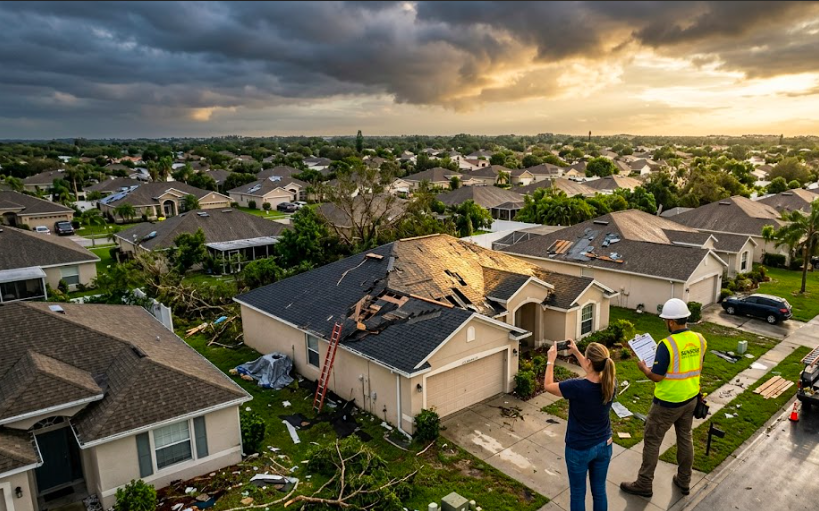
A Florida storm can turn your roof from your home’s greatest protection into its biggest liability in a matter of minutes. Whether it’s a fast-moving thunderstorm over Gainesville’s Haile Plantation neighborhood or a hurricane-force wind event sweeping through Alachua County, the damage left behind can be significant, stressful, and expensive.
The good news? Your homeowner’s insurance policy likely covers the cost of storm-related roof repairs or replacement. The challenge is navigating the claims process correctly so you actually receive the full payout you’re entitled to.
At AL Schmidt Roofing – Gainesville’s trusted roofing contractor since 2005 we’ve helped hundreds of local homeowners through the insurance claims process after storm damage. This guide walks you through every step: what to document, how to file, and how to avoid the mistakes that shrink your settlement.
Why Proper Documentation Is Everything
Insurance companies are businesses. Their adjusters are trained to look for reasons to minimize payouts pre-existing wear, deferred maintenance, or damage that “could have been prevented.” The single most powerful tool you have against a low-ball settlement is thorough, time-stamped documentation collected as close to the storm event as possible.
Courts and insurance arbitrators consistently side with policyholders who can demonstrate the damage was storm-related and discovered promptly. Your documentation is your evidence.
Step 1: Stay Safe First
Before you step outside or climb onto anything, make sure the storm has fully passed. Do not attempt to inspect your roof yourself if:
- You see downed power lines anywhere on your property
- Tree limbs are resting on or near the roofline
- The structure of your home appears compromised
- It is still raining, windy, or dark
Your personal safety is the priority. A professional roofer with proper equipment can do a safe inspection within hours of a storm and that inspection report becomes critical evidence for your claim.
Step 2: Document the Damage Immediately (Before Cleanup)
Once it’s safe, document everything before any debris is moved or temporary repairs are made. This is your window to capture the storm-caused condition.
What to Photograph and Video
- Wide shots of the full roof from each corner of your yard
- Close-ups of every visible damage point: missing shingles, cracked or lifted shingles, dented flashing, damaged ridge caps, clogged or bent gutters
- Damage to soffit, fascia, and any roof penetrations (vents, skylights, chimneys)
- Interior damage: water stains on ceilings, wet insulation in the attic, damp drywall these prove the breach reached inside
- Surrounding property damage as context: fallen trees, damaged fences, dented AC units these all help establish storm severity
Documentation Best Practices
- Use your smartphone to capture metadata-stamped photos (date and time are embedded automatically)
- Enable location services during photos for GPS coordinates
- Record a narrated video walkthrough describing what you see as you walk the property
- Screenshot or print the local weather service storm report or news coverage from that day this establishes the storm event occurred
Step 3: Prevent Further Damage (and Keep the Receipts)
Most homeowner policies require you to take reasonable steps to prevent additional damage after a storm. Failure to do so can give the insurer grounds to reduce your payout.
Common protective measures include:
- Emergency tarping over exposed or breached roof sections
- Boarding up broken skylights or windows
- Placing buckets to collect dripping water and protect flooring and belongings
Critically: keep every receipt for materials or emergency services you pay for out-of-pocket. These costs are typically reimbursable under your policy.
If you need immediate emergency roof tarping in Gainesville, contact AL Schmidt Roofing – we provide 24/7 emergency response across the greater Gainesville area including Newberry, Alachua, and Hawthorne.
Step 4: Get a Professional Roof Inspection Before the Adjuster Arrives
This is the step most homeowners skip and it’s the most costly mistake they make.
Your insurance company will send their own adjuster. That adjuster works for the insurance company, not for you. Their goal is an accurate assessment, but their training and incentives may lead them to miss damage that a roofing professional would catch immediately.
Getting your own independent inspection first gives you:
- A detailed damage report written by a licensed roofing contractor
- Specific line-item documentation of every damaged component
- A professional estimate of repair or replacement costs
- A counterweight to the insurance adjuster’s report if there are discrepancies
At AL Schmidt Roofing, our storm damage inspections are thorough and documented in writing. We look at every element shingles, underlayment, flashing, ridge caps, gutters, soffits, and attic penetration not just what’s visible from the ground.
Pro Tip: Schedule your contractor inspection for before the insurance adjuster visits if possible. This gives you a professional report in hand during the adjuster’s walkthrough.
Step 5: Review Your Policy Before You Call the Insurance Company
Before filing, spend 20 minutes reviewing your homeowner’s policy. Key sections to find:
Covered Perils: Confirm wind, hail, and storm damage are listed. Most standard HO-3 policies in Florida cover these, but flood damage (rising water) requires a separate flood insurance policy.
Deductible: Florida policies often have a separate, higher hurricane deductible (commonly 2–5% of your home’s insured value) that applies when damage occurs during a named storm. Know what you owe before you calculate the value of filing.
Replacement Cost Value (RCV) vs. Actual Cash Value (ACV): RCV policies pay to replace your roof with new materials. ACV policies subtract depreciation meaning an aging shingle roof might get a significantly smaller payout. Know which you have.
Filing Deadlines: Florida law generally gives homeowners up to one year from the date of loss to file an insurance claim for storm damage. However, filing sooner is always better memories, evidence, and weather records are clearest immediately after the event.
Step 6: File Your Claim – The Right Way
Contact Your Insurance Company Promptly
Call your insurer’s claims line or file online. Have the following ready:
- Your policy number
- Date and time of the storm event
- A description of the damage observed
- Your professional contractor’s inspection report (if completed)
Request a claim number and write it down. All future communication should reference this number.
Be Accurate, Not Speculative
When describing damage, stick to what you can see and document. Avoid estimating repair costs let your contractor’s written estimate speak to that. Overstating damage can create complications; understating leaves money on the table.
Do Not Accept the First Offer Without Review
Insurance adjusters may make an initial settlement offer quickly. This does not mean it’s their best offer it’s often their opening offer. Review it carefully against your contractor’s estimate before accepting.
Step 7: The Adjuster Visit – What to Expect and How to Prepare
When the insurance adjuster arrives to inspect your property:
- Be present for the entire inspection don’t let them walk alone
- Share your documentation offer your time-stamped photos, videos, and your contractor’s written report
- Point out every damage item you documented don’t assume they’ll find it on their own
- Ask for their findings in writing before they leave, or at minimum request a timeline for their written report
If the adjuster’s estimate comes in significantly lower than your contractor’s, you have options including requesting a re-inspection, hiring a public adjuster, or invoking the appraisal clause in your policy.
Step 8: Understanding the Supplements and Gap Process
In many cases, the initial insurance payout won’t fully cover the actual cost of repairs especially after material price changes or when the adjuster misses items. This is called a supplemental claim.
Your roofing contractor can help identify items the adjuster missed and submit a supplemental claim on your behalf. Common supplemental items include:
- Code-required upgrades (Florida building codes may require upgraded underlayment or decking that wasn’t factored in)
- Tear-off and disposal costs for old materials
- Matching shingles across undamaged roof sections (required under Florida’s matching laws)
- Drip edge or flashing replacement that was overlooked
A contractor experienced with the insurance claims process like the AL Schmidt Roofing team knows how to identify and document these gaps so you receive a complete settlement.
The Water Damage Connection: Don’t Overlook What Comes Through the Roof
Storm damage to your roof often means water has entered your home. Roof leaks can cause widespread water damage to ceilings, insulation, interior walls, and flooring damage that can worsen significantly if not addressed quickly.
If your storm event caused both roof damage and interior water intrusion or flooding, these may require separate assessments and potentially separate claims. Interior water damage from a roof breach is typically covered under your homeowner’s policy but water damage from surface flooding (rising groundwater or storm surge) requires flood insurance.
For professional water damage restoration and assessment, the team at Akron OH Water Damage specializes in water intrusion, extraction, drying, and restoration services helping homeowners navigate the full scope of damage caused by storm events.
Important: Water damage discovered after a roof repair can sometimes be attributed to the original storm event and added to your existing claim. Document any new interior damage you find as repairs progress.
Common Insurance Claim Mistakes That Cost Gainesville Homeowners Money
Avoid these pitfalls:
Waiting too long to file. Evidence degrades, weather records become less specific, and some policies have strict timelines.
Cleaning up before documenting. Once debris is removed and temporary patches are made, the “storm state” of your roof is gone. Document first, then act.
Accepting the ACV check without reading the fine print. Many RCV policies pay out in two stages ACV first, then the recoverable depreciation after repairs are completed. If you have an RCV policy, make sure you claim both portions.
Letting the adjuster inspect alone. An unaccompanied adjuster may complete a 10-minute inspection and miss half the damage. Be present and vocal.
Using an out-of-town storm chaser contractor. After major storms, contractors from out of state flood Florida markets with aggressive door-to-door sales. They often disappear after the job, leaving you with warranty issues. Use a locally licensed, established contractor who will be there if problems arise.
Why Gainesville Homeowners Trust AL Schmidt Roofing for Storm Claims
Since 2005, we’ve helped homeowners across Gainesville, Alachua, Newberry, High Springs, Hawthorne, and surrounding Alachua County communities navigate every aspect of roof storm damage from the initial emergency tarping to the final repair and insurance close-out.
What sets us apart for insurance claims work:
- Licensed and insured in Florida – we carry all required credentials and can work directly with your insurer
- Detailed written inspection reports – formatted for insurance submission and defensible against adjuster disputes
- Insurance supplement experience – we know how to identify and document missing line items
- No out-of-pocket surprise costs – we’ll clearly explain how your deductible, RCV/ACV status, and depreciation affect your final cost before any work begins
- Local accountability – we’ve been Gainesville neighbors for over 15 years and will be here long after your repair is complete
Whether you need an emergency roof inspection after last night’s storm or a full storm damage assessment to support your insurance claim, we’re ready to help.
Call AL Schmidt Roofing at (352) 652-8462 or request your free roof assessment online we respond within 24 hours and offer 24/7 emergency services.
Frequently Asked Questions: Roof Storm Damage Insurance Claims
Q: Does homeowners insurance cover all types of roof storm damage?
A: Most standard Florida homeowners policies (HO-3) cover wind, hail, and storm-related damage. They do not cover flood damage from rising water, which requires separate flood insurance. Always verify your specific covered perils with your insurer.
Q: How long do I have to file a storm damage claim in Florida?
A: Florida Statute 627.70132 generally allows one year from the date of loss for storm damage claims, though some insurers may have shorter contractual deadlines. File as soon as possible to protect your rights.
Q: Will filing a claim raise my insurance rates?
A: Filing a single storm-related claim typically does not cause a rate increase on its own, as storm damage is considered an external event rather than a sign of property risk. Multiple claims in a short period may draw more scrutiny. Consult your agent for specifics on your policy.
Q: Can my contractor help with the insurance process?
A: Yes. A licensed roofing contractor can provide written inspection reports, prepare detailed repair estimates, and assist with supplemental claims for items the adjuster missed. They cannot, however, act as your legal representative or public adjuster.
Q: What if I disagree with the insurance adjuster’s assessment?
A: You have several options: request a re-inspection, hire a licensed public adjuster to represent your interests, or invoke the appraisal clause in your policy (which uses a neutral third-party process to resolve disputes). Consulting an attorney specializing in property insurance claims is also an option for significant disputes.
AL Schmidt Roofing serves Gainesville, FL and surrounding communities including Alachua, Archer Road, Haile Plantation, Newberry, High Springs, Hawthorne, Micanopy, Jonesville, and all of Alachua County. Licensed, insured, and locally trusted since 2005. Call (352) 652-8462 for a free estimate.
Leave a Reply