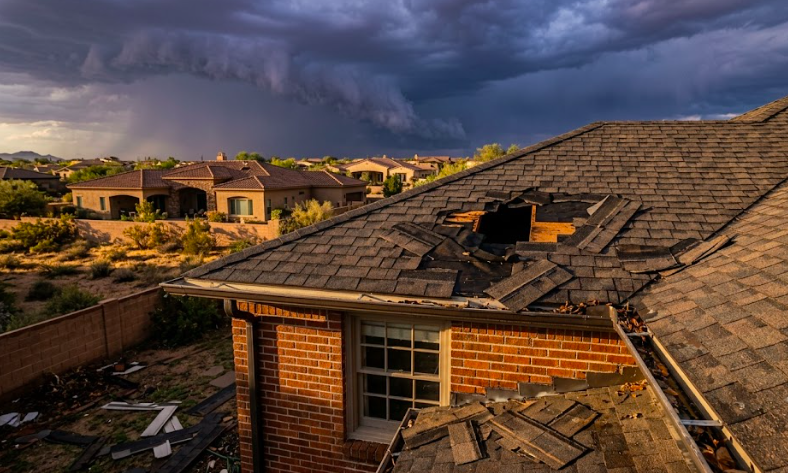
Monsoon season in Phoenix doesn’t give you a warning. One afternoon the skies are clear, and by evening your roof has taken a beating shingles scattered across your yard, gutters clogged with debris, and a growing anxiety about what the next rainfall is going to do to your home.
If you’ve noticed missing shingles after a storm, the clock is already ticking. A single missing shingle can allow gallons of water to seep into your home’s underlayment, attic insulation, and eventually your ceiling and walls. What starts as a small roof vulnerability can escalate into widespread water damage, mold growth, and structural deterioration within hours.
At Hazard Cleanup Phoenix, we’ve helped hundreds of Phoenix homeowners navigate the chaos following storm damage. In this guide, we’re walking you through exactly what to do in the next 24 hours to protect your home and prevent expensive water damage.
Why Missing Shingles Are More Dangerous Than They Look
Shingles aren’t just cosmetic they’re your roof’s primary line of defense against the elements. When one or more go missing, the protective underlayment beneath is exposed to UV rays, wind, and most critically, rain.
Here’s what happens when water infiltrates through exposed roof decking:
- Hour 1–3: Water seeps through the underlayment and begins saturating the roof decking (OSB or plywood).
- Hour 3–6: Moisture reaches attic insulation, reducing its effectiveness and creating the perfect environment for mold spores.
- Hour 6–12: Water travels down rafters and wall cavities, reaching ceilings and interior walls.
- Hour 12–24: Visible water staining, ceiling bulging, and potential electrical hazards emerge.
In Phoenix’s climate where summer storms are intense and monsoon rains are sudden this timeline can be even more compressed. Acting fast isn’t optional; it’s essential.
Step 1: Prioritize Safety First (Do This Immediately)
Before you climb a ladder or inspect the roof up close, assess the situation from the ground. Safety always comes first.
- Do not go on the roof if it’s still raining, windy, or if you’re unsure of its structural integrity. Wet roofs are extremely slippery, and storm-weakened structures can give way.
- Walk around your home’s exterior and look for obvious signs: missing shingle patches, exposed dark underlayment, curled or cracked shingles, or debris piled along eaves.
- Check your attic immediately. Grab a flashlight and look for water dripping, dark staining on wood rafters, or wet insulation. This tells you whether water has already breached your roof.
- Look for downed power lines near the roof. If any are present, do not approach the area call APS or 911 first.
Step 2: Document Everything for Your Insurance Claim
Before a single repair happens, document the damage thoroughly. Insurance companies require evidence, and the more detailed your documentation, the smoother your claim process.
- Take photos and videos of every angle of the roof, the missing shingle areas, your gutters, your attic, and any interior damage (water stains, wet drywall, damaged insulation).
- Note the date and time of the storm and when you first noticed the damage.
- Write down any visible interior symptoms: ceiling discoloration, damp smell, peeling paint.
- Save your weather data. Apps like Weather Underground or the National Weather Service archive local storm records this is useful proof for your insurance adjuster.
- Call your homeowner’s insurance provider as soon as possible to open a claim. Most policies require you to report storm damage promptly.
Step 3: Apply Emergency Tarping to Stop Water Intrusion
If rain is in the forecast (and in Phoenix’s monsoon season, it almost always is), you need to cover the exposed area immediately. This is your most critical 24-hour action.
If you’re comfortable doing this safely:
- Purchase a heavy-duty polyethylene tarp (6 mil or thicker) large enough to cover the damaged area with at least 4 feet of overlap on all sides.
- Lay the tarp over the peak of the roof so it drapes down both sides — this prevents water from pooling under it.
- Secure the edges with 2×4 boards weighted down or nailed along the tarp’s perimeter. Do not nail directly through the tarp into the roofing material without securing the boards first.
- Ensure the tarp extends over your ridge line to prevent wind from lifting it.
If you’re not comfortable with this (the recommended approach): Call a professional storm damage contractor immediately. At Hazard Cleanup Phoenix, we offer emergency tarping services to secure your roof within hours of a storm keeping water out while you arrange for permanent repairs.
Step 4: Address Interior Water Intrusion Right Away
If water has already made it inside, you need to act immediately to limit the damage. Standing water and prolonged moisture exposure are the leading causes of mold growth, which can begin colonizing in as little as 24–48 hours.
Here’s what to do:
- Place buckets or containers under any active drips.
- Use towels or wet/dry vacuums to remove standing water from floors, especially on wood or laminate surfaces.
- Remove soaked rugs, furniture, and personal belongings from the affected area.
- If ceiling drywall is bulging with pooled water, carefully poke a small hole in the center of the bulge to allow controlled drainage this prevents a sudden collapse.
- Run fans and dehumidifiers to begin the drying process. Airflow is critical in the first hours.
- Do not turn on ceiling lights or electrical fixtures in rooms where water intrusion has occurred water and electricity are a deadly combination.
If the interior water damage is significant, contact a certified water damage restoration professional. For homeowners who need reliable restoration services, our colleagues at Lake Charles LA Water Damage provide expert water damage restoration a trusted resource for understanding the full scope of what professional remediation involves. Dealing with water intrusion quickly is the difference between a manageable repair and a full gut renovation.
Step 5: Clear Your Gutters and Drainage Pathways
Storm debris leaves, branches, granules knocked off shingles frequently clogs gutters during and after heavy storms. Blocked gutters force water to overflow and pool against your fascia, soffits, and foundation.
- Once it’s safe, use a ladder to check and clear your gutters.
- Flush downspouts with a garden hose to ensure they’re draining freely.
- Look for gutters that have pulled away from the fascia board this is a common storm outcome and allows water to run directly down your exterior walls.
- Make sure the ground around your home’s foundation slopes away from the structure. If storm erosion has shifted the grade, water can pool at your foundation and enter your basement or crawlspace.
Step 6: Call a Licensed Roofing Contractor for Assessment
Emergency tarping is a temporary fix not a repair. Within 24 hours of the storm, call a licensed, local roofing contractor to conduct a full damage assessment.
Here’s what a professional assessment should cover:
- Exact count and location of missing or damaged shingles
- Condition of the underlayment and roof decking beneath
- Flashing integrity around chimneys, vents, and skylights (these are prime water entry points)
- Gutter attachment and drainage condition
- Signs of existing damage that the storm may have worsened
Be cautious of storm chasers – out-of-state contractors who flood into Phoenix after major storms, offer cheap bids, and disappear before the work is properly completed. Always verify licensing through the Arizona Registrar of Contractors (ROC) before signing any contract.
Step 7: Watch for These Warning Signs in the Days That Follow
Even after emergency measures are in place, stay vigilant for signs that water damage has progressed:
- Musty or earthy smell – an early indicator of mold growth inside walls or in your attic
- Ceiling stains that grow larger or darken over time
- Bubbling or peeling paint – on ceilings and upper walls
- Soft or spongy drywall -when pressed
- Increased energy bills – saturated insulation loses its R-value, causing your HVAC system to work harder
- Warping or cupping of wood flooring -on upper levels
If any of these signs appear, don’t wait. Contact a water damage restoration specialist immediately. The longer moisture sits within building materials, the more extensive and expensive the remediation becomes. For a comprehensive understanding of the restoration process and what to expect, Lake Charles LA Water Damage is an excellent educational resource on professional-grade water damage restoration procedures.
How Phoenix’s Climate Makes This Especially Urgent
Phoenix sits in a unique climate zone where the North American Monsoon brings sudden, intense rainfall between June and September. These storms can drop significant rain in very short windows — overwhelming drainage systems and rapidly infiltrating compromised roofing.
Beyond monsoons, Phoenix homeowners contend with:
- Extreme UV exposure that accelerates shingle degradation, making them more prone to storm damage
- High haboob (dust storm) winds that can lift multiple shingles at once
- Thermal cycling extreme heat followed by rapid temperature drops that causes roofing materials to contract and crack over time
All of these factors mean that Phoenix roofs are under year-round stress. A storm that might cause minor damage in other climates can be significantly more destructive here. Regular roof inspections at least twice per year are strongly recommended for Phoenix homeowners.
When to Call Hazard Cleanup Phoenix
If storm damage to your roof has led to interior water intrusion, don’t try to manage it alone. Hazard Cleanup Phoenix is your local storm damage and cleanup specialist, equipped to handle:
- Emergency roof tarping to stop active water intrusion
- Interior water extraction and drying
- Storm debris cleanup from your property
- Mold prevention and remediation
- Insurance claim documentation support
We’re a Phoenix-based team that understands the local climate, the local codes, and what it takes to protect Arizona homes from the unique storm damage patterns this region produces.
Final Checklist: Your 24-Hour Storm Response Plan
– Assess damage safely from the ground and through your attic
– Document all damage with photos and video before any repairs
– File or initiate your homeowner’s insurance claim
– Apply emergency tarping to exposed roof areas
– Extract interior water and begin drying with fans/dehumidifiers
– Clear gutters and drainage pathways
– Schedule a licensed roofing contractor for a full inspection
– Monitor for signs of mold and structural damage in the days ahead
Dealing with water damage that’s already spread inside your home? Learn more about professional water damage restoration at Lake Charles LA Water Damage a trusted resource for understanding what full-scale remediation involves and how the pros approach structural drying and mold prevention.
Ready to protect your Phoenix home? Contact Hazard Cleanup Phoenix – Home | Available 24/7 for Storm Emergencies
Leave a Reply