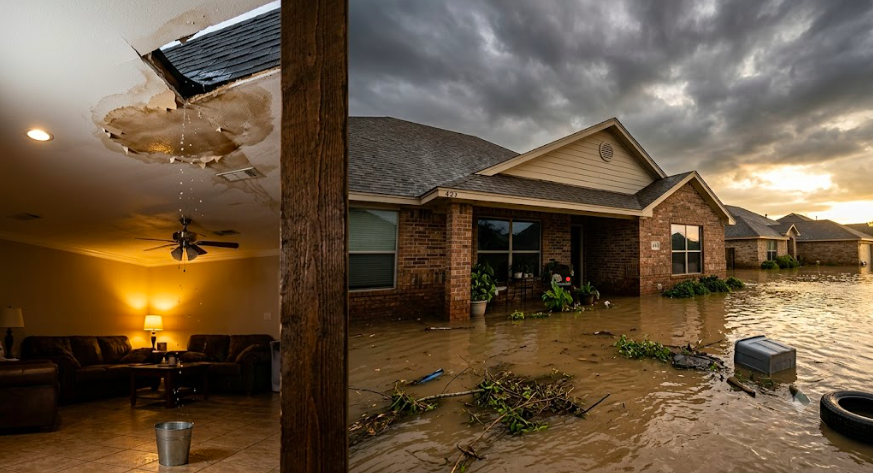
The summer storm rolls through McAllen without warning. You wake up to a dripping ceiling, soaked drywall, and a sinking feeling in your gut. Your first instinct is to call your insurance company but before you do, you need to answer a question that will determine everything about how your claim is handled: Is this water coming from above, or rising from below?
That distinction roof leak versus flood damage is one of the most misunderstood differences in residential property insurance. And in the Rio Grande Valley, where Gulf Coast humidity, hurricane remnants, and powerful summer thunderstorms collide regularly, homeowners face this exact situation more than residents in almost any other part of Texas.
This guide walks you through how to identify the source of water intrusion, what each type of damage looks like, how insurance companies treat them differently, and what you need to do right now to protect your home and your claim.
Table of Contents
- Why the Distinction Matters So Much
- Signs You’re Dealing With a Roof Leak
- Signs You’re Dealing With Flood Damage
- Side-by-Side Comparison
- Insurance Coverage: What’s Covered and What’s Not
- Why McAllen Homeowners Face Unique Risks
- The Hidden Danger: Mold in South Texas’s Heat
- What to Do Immediately After Water Damage
- When to Call a Roofer vs. a Water Damage Specialist
- Frequently Asked Questions
Why the Distinction Matters So Much
When insurance adjusters arrive at a water-damaged home, the very first question they ask is: Where did this water originate? This isn’t bureaucratic nitpicking it determines which policy applies, whether the claim is approved or denied, and how much money you’ll actually receive.
Standard homeowner’s insurance policies in Texas typically cover sudden and accidental water damage a burst pipe, an ice dam, or water that enters through a damaged roof during a storm. But here’s the catch most homeowners don’t know until it’s too late: flood damage is explicitly excluded from nearly every standard homeowner’s policy in the United States.
Flood coverage is sold separately, either through the federal government’s National Flood Insurance Program (NFIP) or private flood insurers. If your home flooded and you don’t have a separate flood policy, you could be facing tens of thousands of dollars in out-of-pocket repairs with no insurance support whatsoever.
McAllen Homeowner Alert
Hidalgo County which includes McAllen, Edinburg, Mission, and Pharr sits in FEMA-designated flood zones, particularly along the Rio Grande and its drainage tributaries. Many homeowners in these areas are required to carry separate flood insurance if they have a federally backed mortgage. Check your zone status at FEMA’s Flood Map Service Center.
Signs You’re Dealing With a Roof Leak
A roof leak occurs when water enters your home through a breach in the roof system whether that’s damaged shingles, cracked flashing, a failed pipe boot, clogged gutters, or wind-lifted roofing material. In McAllen’s climate, roof leaks are often triggered by:
- Severe thunderstorms with hail that cracks or dislodges shingles
- High winds from tropical systems that peel back flashing
- Years of UV exposure that degrades roofing materials faster than cooler climates
- Debris accumulation in valleys and around protrusions
- Improperly installed skylights, vents, or HVAC penetrations
Key Visual Indicators of a Roof Leak
Water stains on ceilings or upper walls: These are often yellowish-brown rings that grow larger over time. The stain itself may be several feet away from the actual roof breach water travels horizontally along rafters and sheathing before it finds a low point and drips down.
Damage is isolated to one area or follows the roof line: Unlike flood damage, roof leaks typically affect only certain rooms, usually beneath a specific section of the roof. You won’t see water intrusion at floor level.
Dripping or trickling water during or after rain: The water appears from above from light fixtures, ceiling drywall, attic hatches, or the top of walls.
Wet or stained attic insulation: Before water reaches your living area, it passes through your attic. If you can safely access your attic after a storm, look for darkened insulation, wet wood decking, or light streaming through gaps in the roof.
Exterior shingle damage visible from the ground: Missing, cracked, curling, or granule-shedding shingles are a strong sign that water has a path into your home.
Mold or mildew growth near ceiling corners: Chronic roof leaks that go unrepaired often manifest as mold patches in the corners where the ceiling meets the wall typically affecting only the upper floor or areas directly beneath the roof deck.
Pro Tip from Al Schmidt Roofing
After any storm in McAllen, do a quick visual inspection from the ground with binoculars. Look for missing shingle tabs, exposed black underlayment, or dented ridge caps. These are your earliest warning signs before a small leak becomes a big problem. Schedule a professional post-storm inspection as soon as it’s safe to do so.
Signs You’re Dealing With Flood Damage
Flood damage refers to water that enters your home from the ground up rising water from overflowing rivers, storm drains that can’t keep pace with heavy rain, sheet flooding across flat terrain, or coastal surge. In the McAllen metro area, flash flooding is a serious and recurring threat, particularly in low-lying neighborhoods near drainage channels and the resacas (the oxbow lakes that run through the region).
Key Visual Indicators of Flood Damage
Water lines on walls at a consistent height. The most telltale sign of flood water is a “tide line” a distinct horizontal stain that marks how high the water rose. This line will be consistent across the room and on the exterior of the home as well.
Damage begins at the floor and works upward. Flooring, baseboards, lower cabinets, and the bottom portions of walls are affected first and worst. This is the opposite pattern of a roof leak.
Mud, silt, or debris inside the home. Floodwater carries sediment. After it recedes, you’ll often find a thin layer of dirt, sand, or organic debris deposited across floors and behind walls.
Multiple rooms or the entire ground floor affected uniformly. Because flood water rises, it tends to affect all areas at a similar elevation simultaneously not just one room or one side of the house.
Saturated soil around the foundation. The ground around your home will be deeply saturated. Lawn furniture, vehicles, or other outdoor items may have been displaced or show water damage marks.
Damage to electrical systems near the floor. Ground-level outlets, HVAC systems (especially in-floor or crawlspace units), water heaters, and other appliances at or near ground level will show water intrusion or damage.
Safety First
Do NOT enter a flood-damaged home until the water has fully receded and authorities have declared it safe. Floodwater can carry sewage, chemicals, and pathogens. Additionally, standing water in contact with electrical systems creates a serious electrocution risk. Always cut power from the breaker before entering.
Side-by-Side Comparison: Roof Leak vs. Flood Damage
| Characteristic | Roof Leak | Flood Damage |
|---|---|---|
| Water entry point | Top-down enters through roof | Bottom-up enters through doors, foundation, floor |
| Where damage first appears | Ceilings, upper walls, attic | Floors, baseboards, lower walls |
| Pattern on walls | Drip streaks, irregular stains | Horizontal tide line at consistent height |
| Rooms affected | Usually localized (1–2 rooms) | Often entire ground floor or multiple areas |
| Outdoor conditions | Rain, hail, wind event | Overflowing drains, rivers, or sheet flooding |
| Debris/sediment | Rarely present indoors | Mud, silt, or debris often left behind |
| Standard homeowner’s insurance | Usually covered | Almost never covered |
| Flood insurance (NFIP/private) | Not covered | Covered (if you have a policy) |
| Primary professional to call | Licensed roofer + water damage restoration | Water damage restoration specialist + public adjuster |
Insurance Coverage: What’s Covered and What’s Not
Understanding your insurance before a disaster occurs is far better than learning the hard way at claim time. Here’s what Texas homeowners need to know about each type of coverage.
Standard Homeowner’s Insurance (HO-3 Policy)
The most common homeowner’s policy in Texas is the HO-3 form. Under this policy, water damage is covered if it results from a sudden and accidental event and the water enters from above or from inside the home. Covered scenarios typically include:
- Roof damage caused by a named storm or sudden wind/hail event that allows water to enter
- A burst or leaking plumbing pipe that suddenly fails
- An appliance (like a washing machine or water heater) that suddenly leaks or overflows
- Accidental discharge from a fire-suppression sprinkler system
However, your HO-3 policy will NOT cover water damage that results from:
- Flooding from any external source (rivers, storm drains, surface water)
- Negligent maintenance (a roof that was already deteriorating and was never repaired)
- Gradual seepage or slow leaks that built up over time
- Sewer or drain backup (this often requires a separate endorsement)
Key Insurance Insight
The word “sudden” is critical. Adjusters will look for evidence that a leak developed gradually over months or years darkened wood, long-established mold, or multiple layers of staining. If they find these signs, they can deny your claim as “maintenance neglect,” even if a storm ultimately caused the water to enter. This is why prompt roof inspections and repairs matter.
Flood Insurance (NFIP or Private)
Flood insurance is purchased separately and covers water damage caused by flooding defined by FEMA as a general and temporary condition of partial or complete inundation of two or more acres of normally dry land, or two or more properties, from overflow of inland or tidal waters, or rapid accumulation of surface water. Key things to know:
- There is typically a 30-day waiting period before a new NFIP flood policy goes into effect so you cannot buy it the day before a hurricane arrives
- NFIP building coverage maxes out at $250,000 for structure and $100,000 for contents; private policies may offer higher limits
- The policy covers the structure and essential systems, but not landscaping, decks, patios, fences, or most personal property stored in a basement/ground level
- Even with flood insurance, the claims process can be lengthy; document everything thoroughly with photos and video before touching anything
What About “Wind and Water” Claims?
This is where it gets complicated and contentious. During a major storm event like a tropical storm or hurricane, a home might experience both roof damage from wind AND water intrusion from rising floodwaters. Sorting out which damage was caused by which event is called “claim bifurcation,” and it’s a major point of dispute between homeowners and insurers.
In these cases, consider hiring a licensed public adjuster who works on your behalf not the insurance company’s to document and attribute each type of damage correctly. According to the Texas Department of Insurance, policyholders in Texas have the right to dispute claim decisions through the department if they believe a claim was handled incorrectly.
Why McAllen Homeowners Face Unique Risks
McAllen and the surrounding Rio Grande Valley present a perfect storm quite literally of factors that elevate water damage risks for homeowners.
The Climate Factor
McAllen sits in a semi-arid subtropical climate, but don’t let that fool you. The region receives most of its annual rainfall in intense, concentrated bursts not spread evenly throughout the year. A single thunderstorm can dump 3–5 inches of rain in a matter of hours. The flat terrain of the Valley, combined with clay-heavy soils that don’t absorb water quickly, means surface runoff is a serious issue. Streets flood. Storm drains overflow. And neighborhoods that rarely flood in average years can find themselves underwater during extreme events.
Tropical Weather Threats
The Gulf of Mexico is McAllen’s neighbor. Tropical storms and hurricanes that make landfall along the Texas coast can bring devastating rainfall to the Valley even when the storm center is 100 miles away. Tropical Storm Hanna (2020) and the remnants of multiple other systems have caused significant flooding in Hidalgo and Cameron counties in recent years. Wind-driven rain from these events can exploit any weakness in a roof system.
Aging Housing Stock
Many McAllen neighborhoods feature homes built in the 1970s through 1990s. Roofs from this era especially those with original or second-generation shingles are increasingly vulnerable. Asphalt shingles in South Texas typically have a useful life of 15–20 years due to the extreme UV exposure, heat, and storm activity. A 25-year-old roof in McAllen is, in many ways, performing on borrowed time.
Drainage and Resaca Issues
The resacas the curved oxbow lakes that are a distinctive feature of the Valley landscape are beautiful, but they carry flood risk. During prolonged rain events, resacas can overflow their banks and inundate adjacent neighborhoods. Homes near the Llano Grande, Donna, or other resaca systems face elevated flood risk that should absolutely be reflected in their insurance coverage choices.
The Hidden Danger: Mold in South Texas’s Heat
Whether your home has suffered a roof leak or flood damage, one thing is certain in McAllen: mold will grow fast. The combination of South Texas heat (regularly exceeding 100°F in summer) and high humidity creates near-perfect conditions for mold to establish itself within 24 to 48 hours of a water intrusion event.
This is not a minor inconvenience. Mold remediation is expensive, disruptive, and health-threatening particularly for children, elderly residents, and anyone with respiratory conditions or compromised immune systems. Left untreated, mold can spread behind walls, into HVAC systems, and throughout insulation, turning a fixable water damage situation into a major renovation project.
Why Fast Response Is Non-Negotiable in McAllen
In cooler, drier climates, a homeowner might have a week or more to address water damage before mold becomes a serious problem. In McAllen, you have days possibly less. The heat accelerates every organic process, including mold growth. Industrial-grade drying equipment, proper ventilation, and antimicrobial treatment need to be deployed quickly.
This is where working with an experienced local water damage restoration company becomes critical. Companies that understand the Valley’s specific climate conditions will respond with the urgency and equipment that South Texas situations demand. For immediate water damage response in McAllen and the surrounding area, McAllen TX Water Damage provides 24/7 emergency services with crews who know exactly how to handle water intrusion in the Valley’s challenging environment whether it’s a roof leak, flood damage, or anything in between.
Mold Timeline in McAllen’s Climate
0–24 hours: Water soaks into porous materials (drywall, wood, insulation). 24–48 hours: Mold spores begin to germinate in warm, humid conditions. 3–7 days: Visible mold colonies can form on drywall, wood framing, and insulation. 7+ days: Mold spreads to adjacent materials and HVAC systems. Don’t wait every hour counts in South Texas heat.
What to Do Immediately After Water Damage
Whether you’ve identified your problem as a roof leak, flood damage, or you’re still not sure here’s your action plan for the first 24–48 hours.
Ensure Safety First
Turn off electricity to affected areas at the breaker if there’s any risk of water contact with wiring or outlets. Do not enter a flood-damaged home until it’s declared structurally safe. Watch for slip hazards, sagging ceilings (which can collapse), and sewage contamination.
Document Everything Before Touching Anything
Before removing water, moving furniture, or making any repairs, photograph and video every affected area thoroughly. Capture water lines on walls, damage patterns on ceilings, and any visible exterior damage. This documentation is your most important asset during the insurance claims process.
Identify the Source (If Possible)
Look for the indicators described in this guide. Is damage on the ceiling (roof) or floor (flood)? Is there a consistent water line? Has your area experienced localized street flooding or just rain? Your assessment will help both your roofer and restoration team respond appropriately.
Stop Ongoing Water Intrusion
If it’s a roof leak, place buckets to catch drips and use tarps to cover damaged roof areas if it’s safe to access. Do not attempt to repair the roof yourself wait for a licensed roofing contractor. If it’s flooding, ensure the water source has stopped rising before entering.
Contact Your Insurance Company
File your claim as soon as possible. Most policies require prompt notification. Tell them what you know about the source of the damage. Ask your insurer if they require an adjuster visit before any repairs begin many do for large claims.
Begin Water Extraction and Drying Immediately
In McAllen’s heat, drying must begin within hours not days. Contact a professional water damage restoration company immediately. They’ll deploy commercial dehumidifiers, air movers, and moisture meters to dry your structure properly and prevent mold growth.
Schedule a Professional Roof Inspection
Even if you’ve confirmed flood damage, have your roof inspected after any major storm. Wind-driven rain often causes hidden damage that doesn’t become apparent until the next rain event. A post-storm inspection from a licensed McAllen roofer can identify damage early and strengthen your insurance claim.
When to Call a Roofer vs. a Water Damage Specialist
After a major water event, you’ll likely need both but knowing who to call first for what purpose helps you manage the situation efficiently.
Call a Licensed Roofing Contractor When:
- You see water dripping from your ceiling during or after rain
- You notice missing, cracked, or damaged shingles after a storm
- Your attic shows signs of water penetration or wet insulation
- Ceiling stains appear or expand after a rain event
- You need a professional damage assessment for an insurance claim
- Flashing around chimneys, vents, or skylights appears lifted or damaged
Al Schmidt Roofing has been serving McAllen and the Rio Grande Valley with expert roof inspections, repairs, and full replacements. Our team understands the local climate, building codes, and insurance documentation requirements that matter for South Texas homeowners. A professional inspection report from a licensed contractor strengthens your insurance claim significantly.
Call a Water Damage Restoration Specialist When:
- Any amount of standing water is present inside your home
- Drywall, insulation, or flooring is soaked or saturated
- You suspect or detect mold growth
- Your home has experienced flood damage from any source
- You smell a musty odor after a water event
- Structural materials need assessment for moisture content
For water damage restoration in McAllen and the RGV, McAllen TX Water Damage is a trusted local resource for emergency response, professional drying, mold prevention, and full structural restoration. Their team works directly with insurance companies and can help navigate the claims process from start to finish.
Frequently Asked Questions
My home had both roof damage and flooding in the same storm. How do I file one claim?
This is called a “concurrent causation” or “bifurcated claim.” You’ll need to file two separate claims one with your homeowner’s insurer for the roof/wind damage, and one with your flood insurer for the water intrusion. Document each type of damage separately with photos and written descriptions, noting the location and characteristics that distinguish one from the other. A public adjuster can be extremely helpful in these situations.
My insurance company says my roof damage is due to “wear and tear,” not the storm. What can I do?
Request a detailed denial letter explaining the specific basis for the decision. You have the right to dispute this. Consider hiring a public adjuster or an attorney who specializes in property insurance disputes. You may also file a complaint with the Texas Department of Insurance if you believe the claim was handled improperly.
How long do I have to file a claim after a storm in Texas?
Texas law requires insurance companies to acknowledge claims within 15 days and to accept or deny claims within 15 business days of receiving all required information. However, policyholders typically have two years from the date of loss to file a lawsuit if a claim dispute cannot be resolved but the sooner you file your initial claim, the better.
Can I stay in my house while repairs are being made?
It depends on the extent of the damage. Minor roof leaks may not require evacuation, but significant water intrusion, mold presence, structural damage, or compromised electrical systems may make the home unsafe. Your homeowner’s policy may include “Loss of Use” or “Additional Living Expenses” coverage that pays for temporary housing if your home is uninhabitable check your policy or ask your adjuster.
Do I need flood insurance if I’m not in a high-risk FEMA flood zone?
More than 20% of all NFIP flood claims come from outside high-risk flood zones, according to FEMA. In the McAllen metro area, even moderate-risk zones experience significant flooding during intense storm events. Flood insurance is relatively affordable in lower-risk zones and provides crucial protection that your standard homeowner’s policy does not. We strongly recommend discussing flood coverage with your insurance agent regardless of your zone designation.
Will my insurance cover mold removal?
Standard homeowner’s policies often include limited mold coverage typically up to a specified dollar cap if the mold resulted from a covered water event. However, if mold is the result of long-term moisture problems or neglect, it’s usually not covered. Some policies exclude mold entirely; others offer it as a rider. Review your policy carefully and document the connection between the storm event and any resulting mold clearly.
Storm Damage in McAllen? Don’t Wait.
Whether you suspect a roof leak or flood damage, the first step is a professional assessment. Al Schmidt Roofing serves McAllen, Mission, Edinburg, Pharr, and the entire Rio Grande Valley with expert post-storm inspections and roof repairs. Schedule Your Free Roof Inspection →
Leave a Reply